

Conceptual trail and trailhead design studies exploring movement, immersion, access, and orientation in natural landscapes.
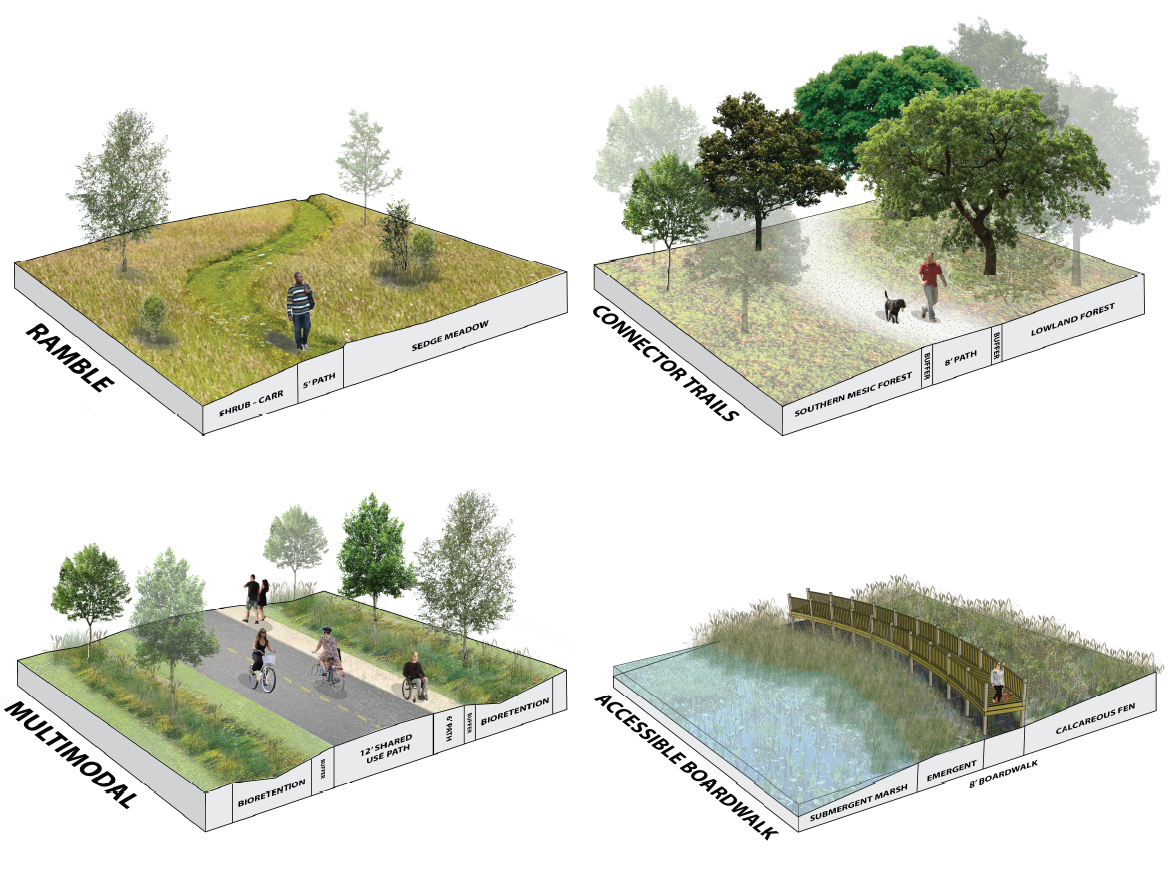
Trails are more than routes between destinations. They influence how people move through, encounter, and understand the landscapes around them.
Different environments call for different approaches to recreational access. From shared-use corridors and wooded connector paths to lightly defined meadow routes and elevated wetland boardwalks, each intervention responds to distinct physical conditions and visitor experiences.
This collection of conceptual design studies explores those relationships, along with the trailhead infrastructure that helps visitors navigate and interpret a place.
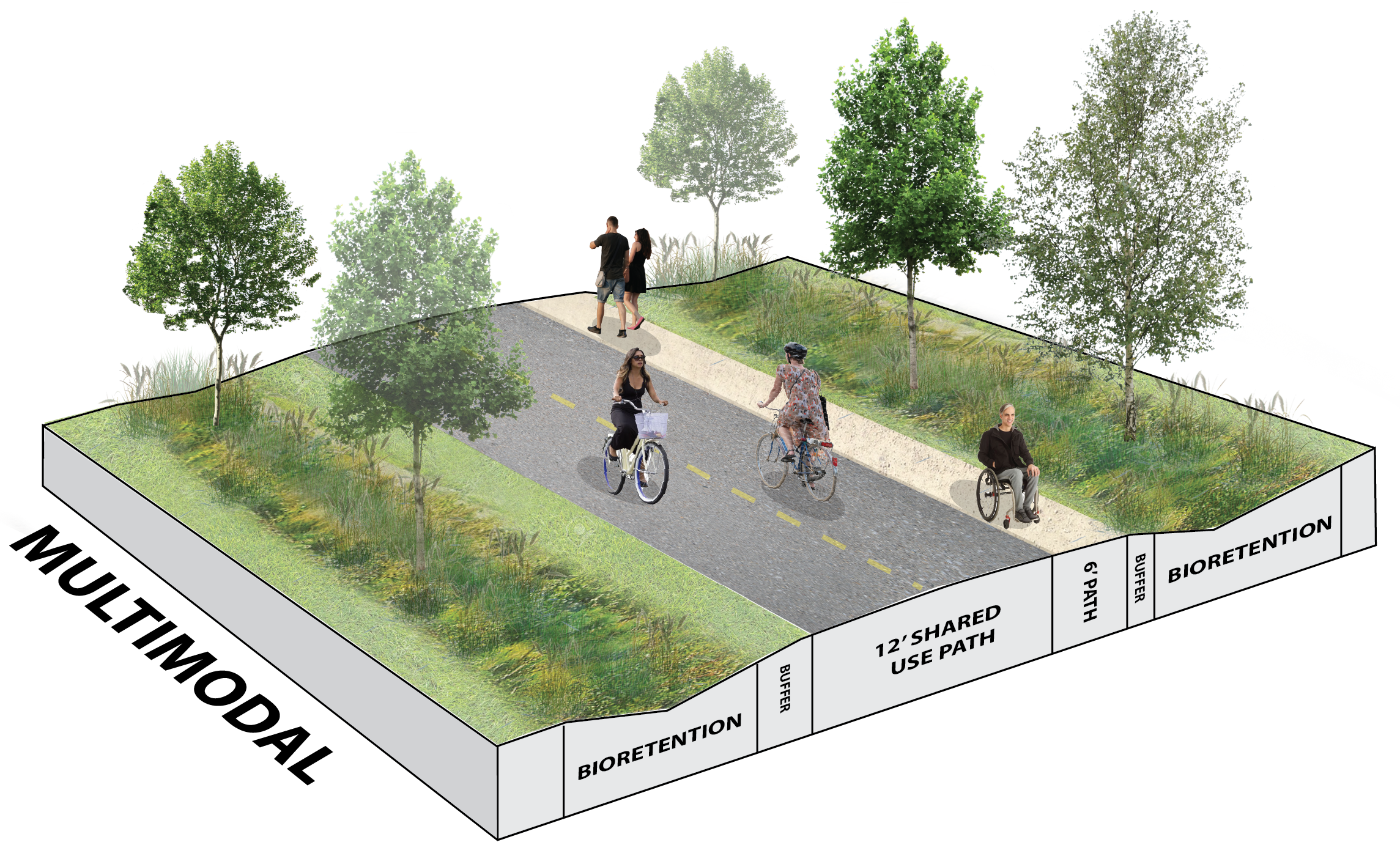
A shared-use trail corridor accommodates pedestrian and bicycle circulation while integrating planted buffers and bioretention areas. The design explores how recreational connectivity, landscape character, and green infrastructure can work together within a single corridor.
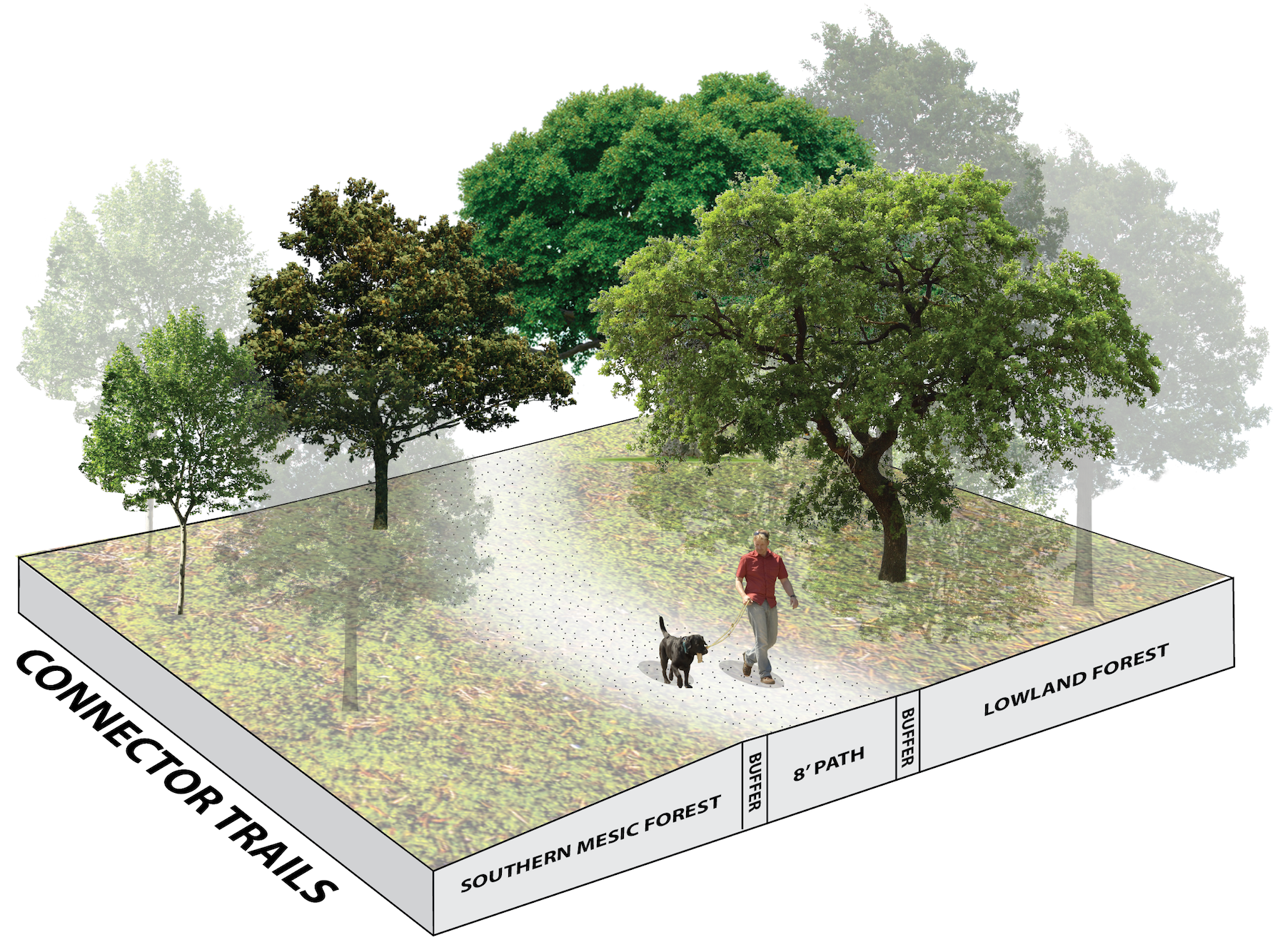
A smaller-scale connector trail links adjacent landscape areas while providing a simple, comfortable walking experience.
Moving through wooded conditions, the path explores how lighter circulation routes can connect larger trail systems, support everyday use, and extend access through more intimate landscape settings.
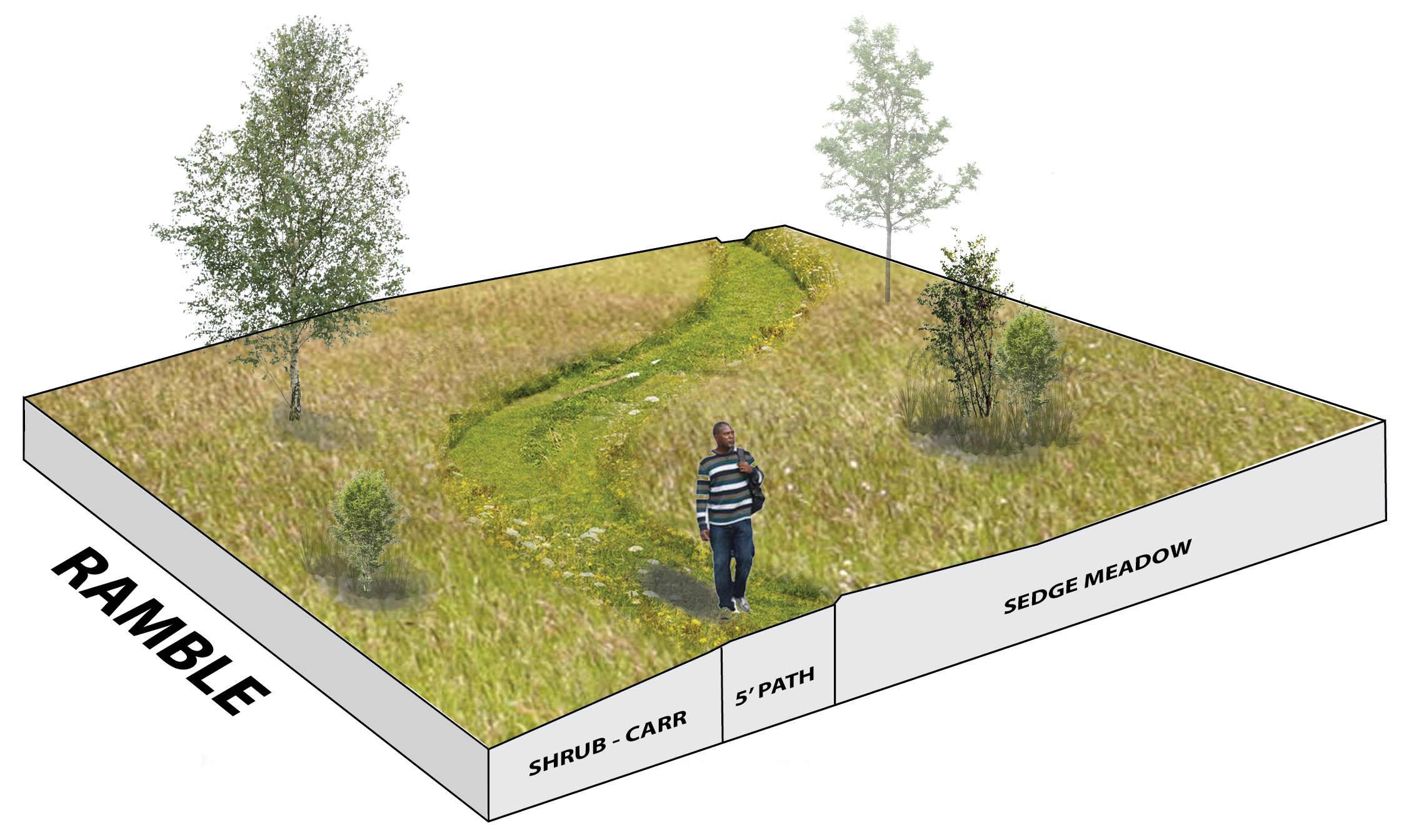
A narrow, lightly defined path offers a quieter, more intimate experience of the landscape.
Moving through meadow vegetation, the trail emphasizes a restrained approach to recreational access, allowing natural character and seasonal change to shape the visitor experience.
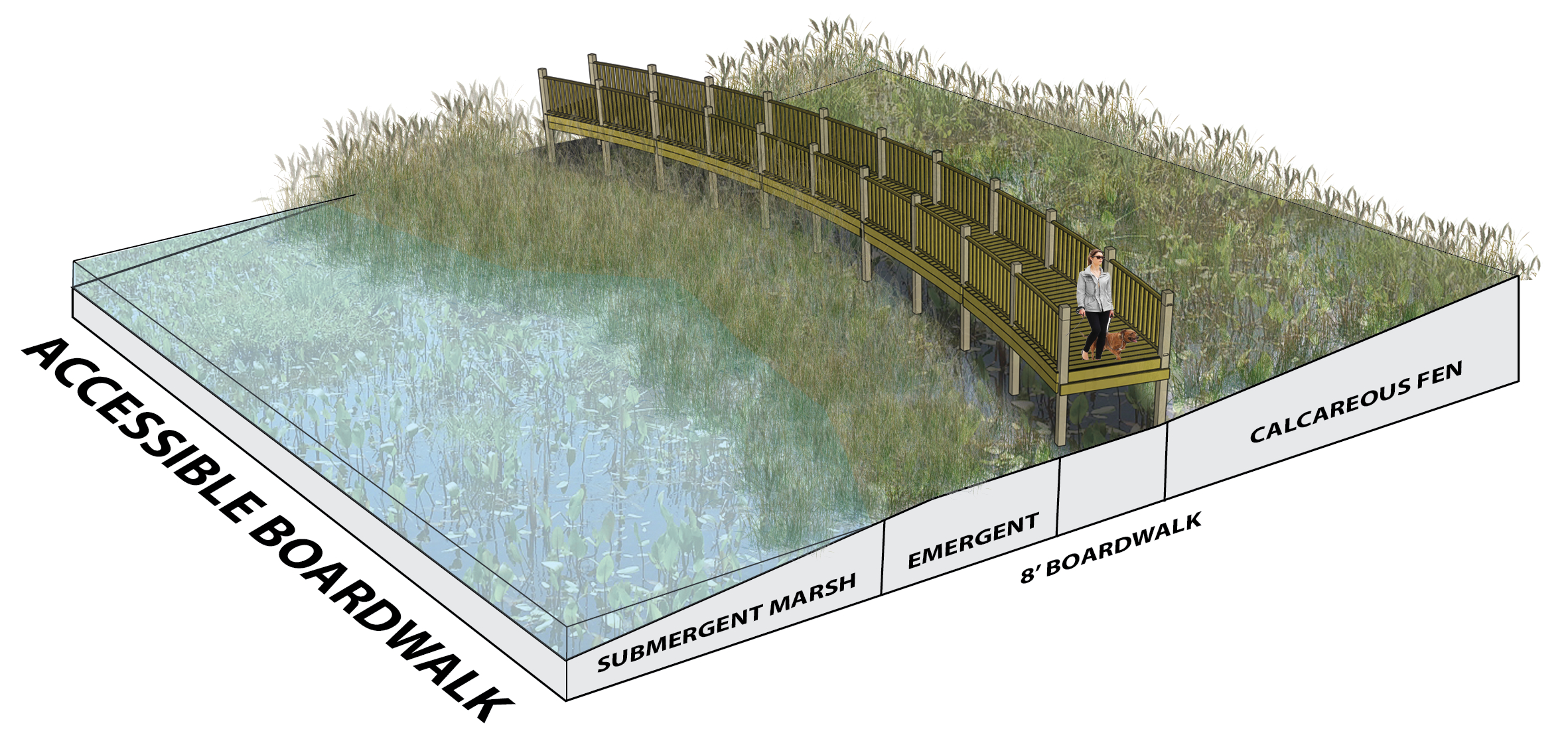
An elevated boardwalk creates opportunities to experience wetland environments while minimizing direct disturbance to sensitive ground conditions.
The design explores how a constructed pathway can extend recreational access into landscapes where conventional trails may be inappropriate.
The visitor experience begins with understanding a place.
A freestanding trailhead kiosk provides wayfinding, orientation, and interpretive information within a compact structure that establishes a recognizable point of arrival.
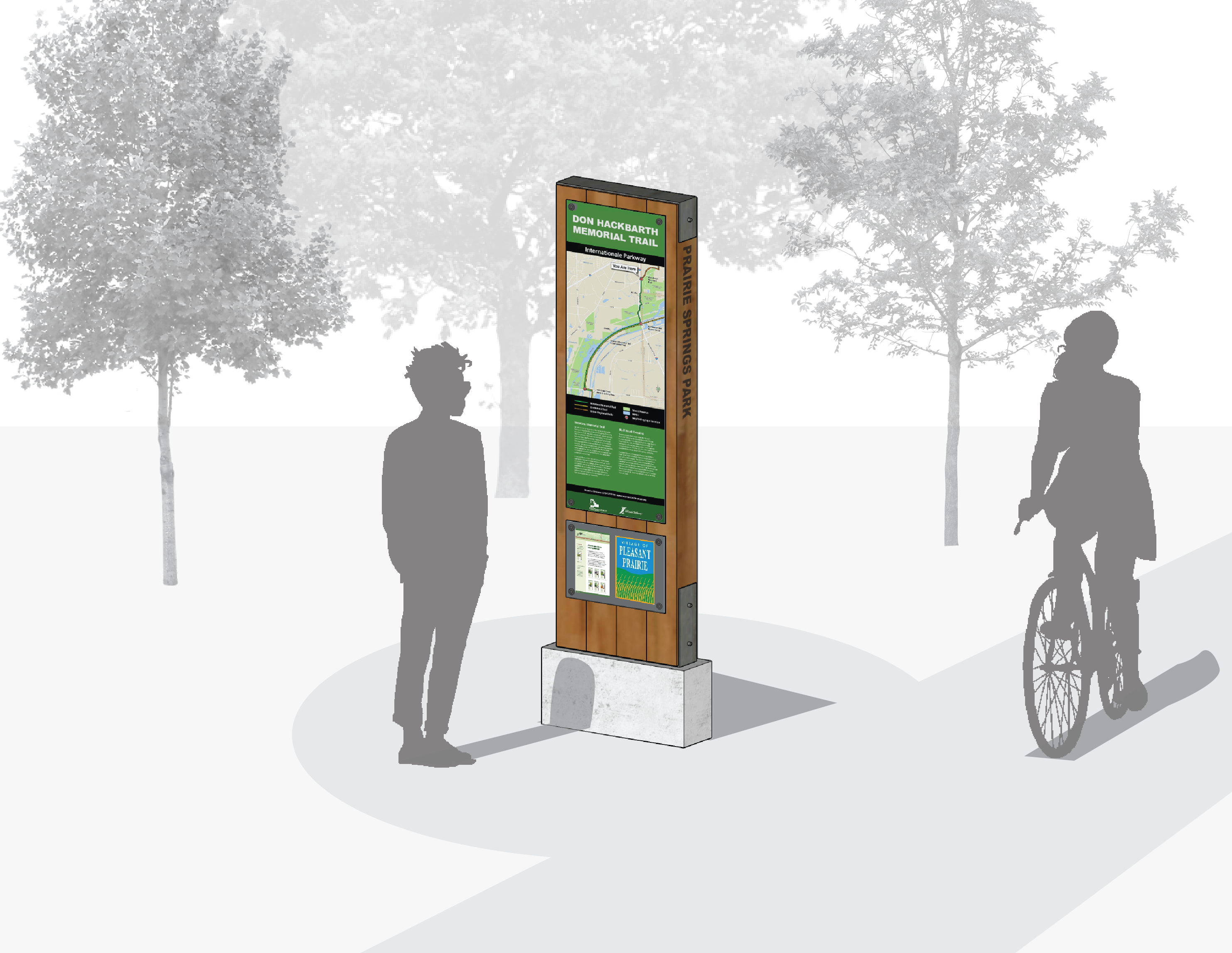
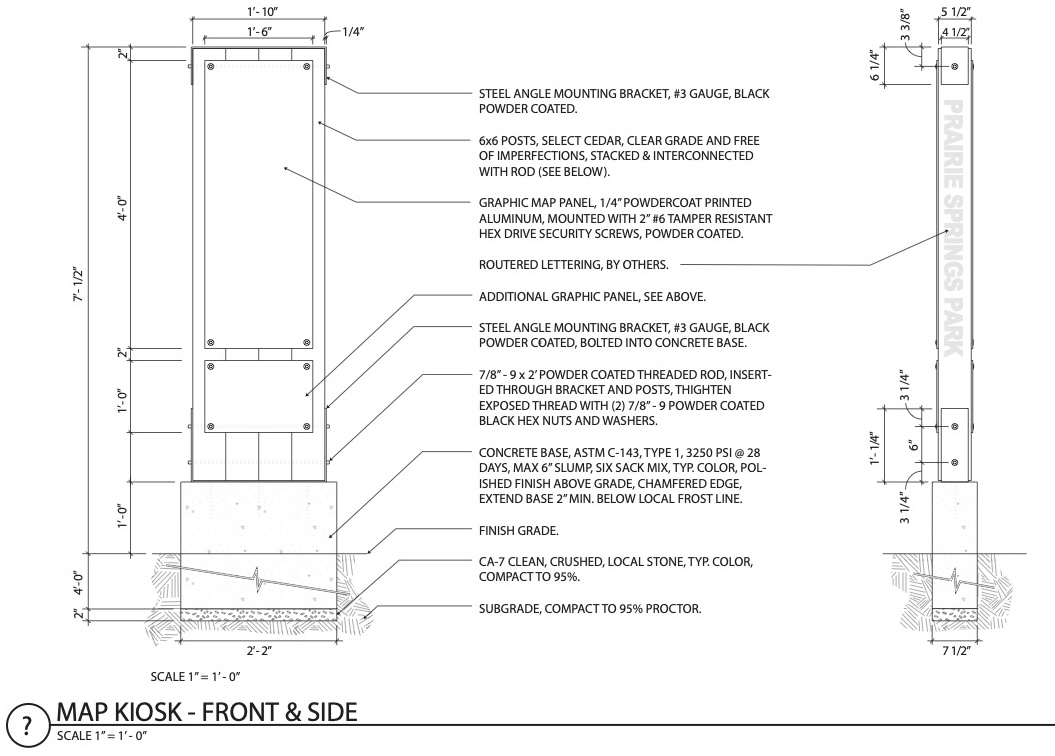
The kiosk study extends beyond visualization into technical design development.
Dimensioned elevations, material specifications, mounting hardware, structural connections, and foundation details illustrate how a conceptual design can be translated into a coordinated physical assembly.
These conceptual design studies originated in a 2021 landscape architecture capstone at the University of Wisconsin–Madison. Selected elements are presented here as a focused exploration of trail design, visitor experience, and supporting infrastructure.