
A former golf course reimagined as a nature retreat integrating habitat regeneration, migratory bird conservation, and small-scale lodging.

Situated immediately north of Two Rivers, Wisconsin, near the Lake Michigan shoreline, the former 65-acre golf course presents an opportunity to reconsider the future of a landscape once dedicated to recreation.
Its location along the Great Lakes migratory corridor provides important ecological context. Existing vegetation, topography, drainage patterns, and the property's history inform an understanding of its character and potential.
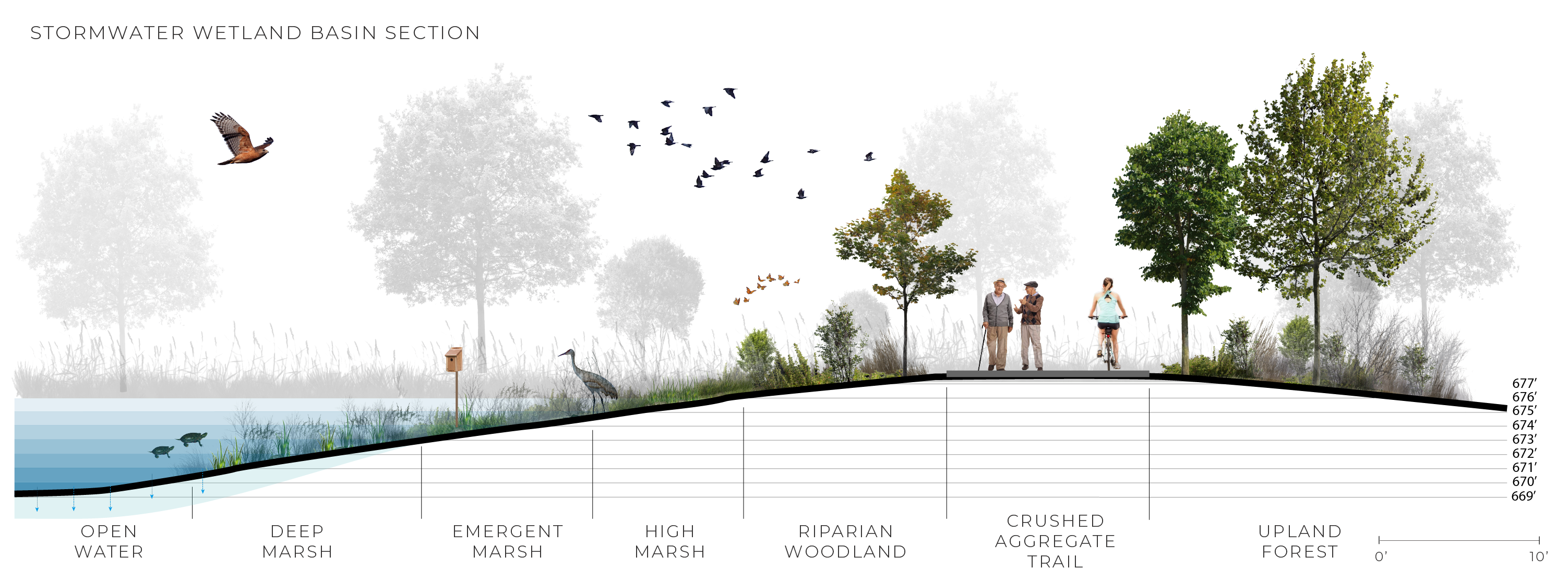
The design approach builds upon natural processes already underway, guiding the property toward a diverse mosaic of wetlands, grasslands, savanna, woodland, and trails.
These habitat communities form the organizing framework for the landscape, informing the placement of walking trails, gathering spaces, and areas of human activity. A modest lodging program introduces opportunities to experience the land while keeping ecological regeneration central to the vision.
The conceptual master plan brings together habitat restoration, interconnected trails, timber-frame guest cabins, and shared outdoor spaces.
Cabins are situated within distinct landscape settings, offering opportunities for quiet observation, recreation, and connection with nature. The regenerated landscape becomes the defining feature of the retreat rather than simply a backdrop for development.

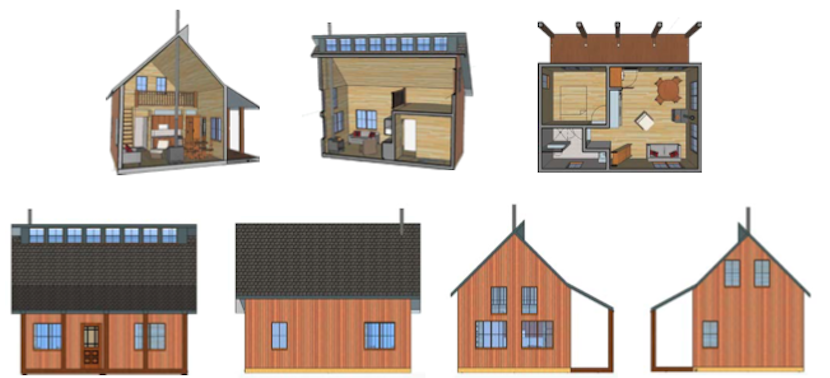
The guest cabin concept explores how a compact timber-frame structure can provide comfortable accommodation while maintaining a close relationship with its surroundings.
Architectural modeling, elevations, sections, and construction studies investigate the building's form, materials, and spatial organization, connecting the scale of the individual cabin to the larger landscape vision.
Conceptual portfolio study developed from earlier site-specific ecological planning and academic design work. The nature-based lodging component is a subsequent hypothetical exploration, not a commissioned or approved development proposal.